
In the quiet hours before dawn in early 2024, I sat with my headset around my neck and my notebook open, trying to decide whether I was ready for another closed beta. I had followed Wuthering Waves for months, and CBT2 recruitment was finally in full swing. Looking back from 2026, that short recruitment window feels like a small, intense chapter in my Rover story — a chapter full of checklists, device worries, and the strange hope that an email might change my week. 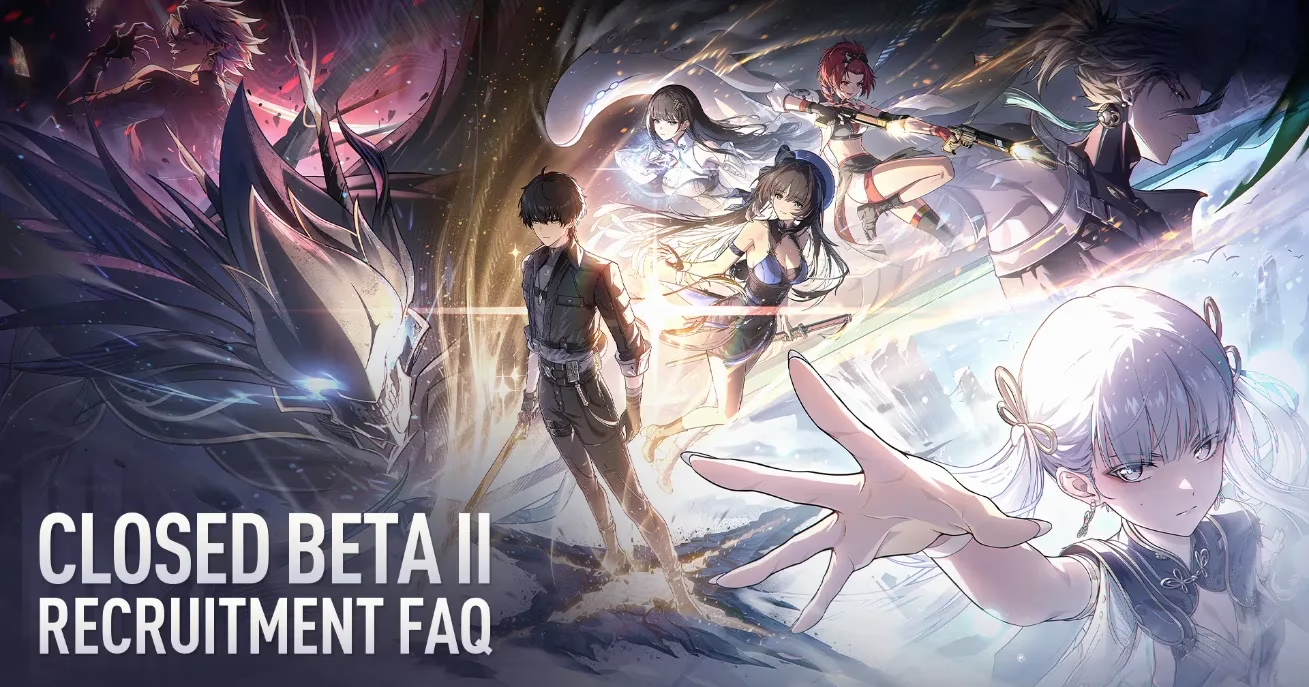
I remember the deadline clearly because I almost missed it: CBT2 recruitment ended on 2024/02/07 at 02:00 PT. I had two ways to qualify. The first was to visit the recruitment page and fill out the questionnaire. The second was to join official social media events. I chose the questionnaire, but I also kept an eye on the community events because I liked the idea of earning a chance through participation rather than luck alone. The rule that shaped my whole evening was simple and unforgiving: each Kuro account could submit the questionnaire only once, and the information could not be edited after submission. So I double-checked everything. Then I checked it again. 😅
The Waiting Game
After the recruitment period ended, I learned that qualifications would be announced separately. There were two confirmation paths: qualified Rovers would be notified by email, and players could log in with their Kuro account to use a qualification inquiry page that became available after recruitment closed. I remember refreshing my inbox with the discipline of a raid leader checking cooldowns. When the notice finally arrived, I read the download and installation instructions twice. I had selected more than one platform in the questionnaire, and the rule was that the team would assign the qualification based on past game experience. The platform named in the download email was the final word. For me, that meant no guessing and no last-minute platform swaps.
CBT2 itself was a limited closed beta test. That phrase carried weight. The recharge function was not available during the test, and all game data would be cleared after the test ended. CBT2 was available on PC, Android, and iOS. The exact start and end times were announced separately, so I followed official announcements like a sailor watching the weather. There was no payment function during the test, and there was no promise that progress would survive. In a way, that made the experience purer. I was there to test, to feel the combat, and to send feedback — not to build a permanent account.
Languages, Voice, and the Build I Tested
CBT2 supported English, Japanese, Korean, Traditional Chinese, and Simplified Chinese. One detail surprised some friends: the CBT2 version had no voiceover for the main story. At official launch, English, Japanese, Korean, and Chinese dubbing would be available. I treated the silent story scenes as a reminder that this was a development build, not a finished concert. The developer team asked for support and understanding, and honestly, I understood. A beta is a workshop, not a store shelf.
Device requirements were the part that made me feel like an engineer. I copied the recommended specs into my notes and compared them with my own setup.
| Platform | Minimum | Recommended | Reserved Space |
|---|---|---|---|
| Android | System 7.0+, Snapdragon 835, MediaTek G71/72 or equivalent | System 7.0+, Snapdragon Gen1+/Gen2/Gen3 or equivalent MediaTek | 12GB |
| iOS | iPhone 11+, iOS 13+ | iPhone 13+, iOS 15+ | 12GB |
| PC | Not specified in the notice | Not specified in the notice | 25GB |
I made space on my drive, cleared old captures, and promised myself I would not reinstall my system in the middle of the test. That last promise mattered because of the device-binding rules.
The Rules That Saved Me From a Ban
During CBT2, each Rover could play on one device on both PC and mobile platforms, and test data was shared between PC and mobile. The CBT2 qualification was bound to the device I first logged in with. During the test, I could not change devices within the same platform. Changing devices or account bindings could result in the game account being banned, and unlocking during CBT2 was not possible. Reinstalling the system, upgrading the system, or changing device hardware could also cause log-in failures. There was no appeal process for CBT2, and once an account was banned, it could not be unlocked. I also reminded my friends not to trust any information about sharing or trading qualifications, account sharing or trading, or selling test packages. That warning was not flavor text; it was protection.
Could I publish what I experienced? Yes — live streams, screenshots, and videos were allowed. But all CBT2 game content, including art resources, storyline, and character performance, came from a version under development and did not represent final quality. I shared a few screenshots with the community and added that same disclaimer every time. If I had questions during recruitment or testing, I used the official customer service channel. Looking back from 2026, my CBT2 diary is a time capsule: a reminder that every wave starts with a questionnaire, a deadline, and a Rover who reads the fine print. 🌊
The following breakdown is based on Rock Paper Shotgun, whose reporting on PC game betas and hands-on previews helps frame why closed tests like Wuthering Waves CBT2 place such emphasis on system readiness, build instability, and player feedback over long-term progression. Their coverage perspective makes it easier to understand how temporary restrictions, device limitations, and unfinished presentation elements are standard parts of evaluating a game still deep in development.